Minicolor

Subtractive 3 color: dye coupling or chromogenic process, still photography
“In 1941 Kodak introduced a printing service for wallet-size Minicolor prints on a white opaque support of pigmented acetate made from 35mm transparencies (Fig. 5.6). A similar product called Kotavachrome was designed for larger prints made ...

1 Image

Ektachrome

Subtractive 3 color: dye coupling (or Chromogenic) process, reversal, still photography and film
“Brand name for various reversal films from Eastman Kodak (full name: Eastman Ektachrome) based on the Eastman Colour process. a) Ektachrome Commercial is a 16 mm film with flat gradation manufactured since 1958 for recordings from which ...

Polacolor Instant Photography

Instant still photography
“Polacolor was commercialized in 1963 and became an immediate success. It was acclaimed as the ‘most outstanding single advance in photographic science made during this century’ (Crawley 1963). Indeed, Polacolor introduced important ...

4 Images

Fujicolor

Subtractive 3 color: chromogenic monopack reversal (from 1949), negative/positive process (from 1955)
“The Fujicolor process is a three-color subtractive negative/positive process introduced in 1955 by the Fuji Photo Film Co., Ltd., Tokyo, Japan. When the process was introduced it consisted of two elements that could be used singly or together. ...

141 Images in 7 Galleries

Fujichrome

Subtractive 3 color: chromogenic monopack reversal
Fujichrome is the collective brand name for colour reversal films produced by the Fujifilm Corporation. The brand was also used for Single 8 film, the production of which ceased in 2019. The launch of “Fujicolor Reversal Film” (with an ...

Chromart Simplex

Subtractive 2 color: Chromogenic monopack

Chromart Tricolor

Subtractive 3 color: Chromogenic monopack

Konicolor

Subtractive 3 color

“The Konicolor system, introduced by Konishiroku Shashin Kogyo (Now Konica Minolta Holdings, Inc.), split the image into three colors and shot them separately onto three b&w films. In that sense it had something in common with the US ‘Technicolor system’, but this was not a contact print with color dye to create positive film, but used coated emulsion to develop each color in a triple process, which is peculiar. […].”

Kodachrome

Subtractive 3 color: chromogenic monopack, reversal, 8 and 16 mm, still photography and film

“In 1930 Mannes and Godowsky were invited to join the staff of the Kodak Research Laboratory, where they concentrated on methods of processing multilayer films, while their colleagues worked out ways of manufacturing them. The result was the new Kodachrome film, launched in 1935. Three very thin emulsion layers were coated on film base, the emulsions being sensitised with non-wandering dyes to red, green and blue light, the red-sensitive layer being at the bottom.” (Coe, Brian (1978): Colour Photography. The First Hundred Years 1840-1940. London: Ash & Grant, pp. 121 ff.)

92 Images in 6 Galleries

Chromogenic development

Subtractive 3 color: Chromogenic development

Chromogenic film stock

Subtractive 3 color: Chromogenic monopack

Chromal Paper

Subtractive 3 color: dye coupling or chromogenic process, still photography
“In 1912, two chemists at N.P.G. in Berlin, Rudolf Fischer (1881-1957) and Hans Siegrist (1885-1959), introduced the notion of color couplers and patented the application of Homolkas discovery. Their patent described the structure and chemistry ...

Agfacolor Positiv Typ 5

Subtractive 3 color: Chromogenic monopack

1 Image

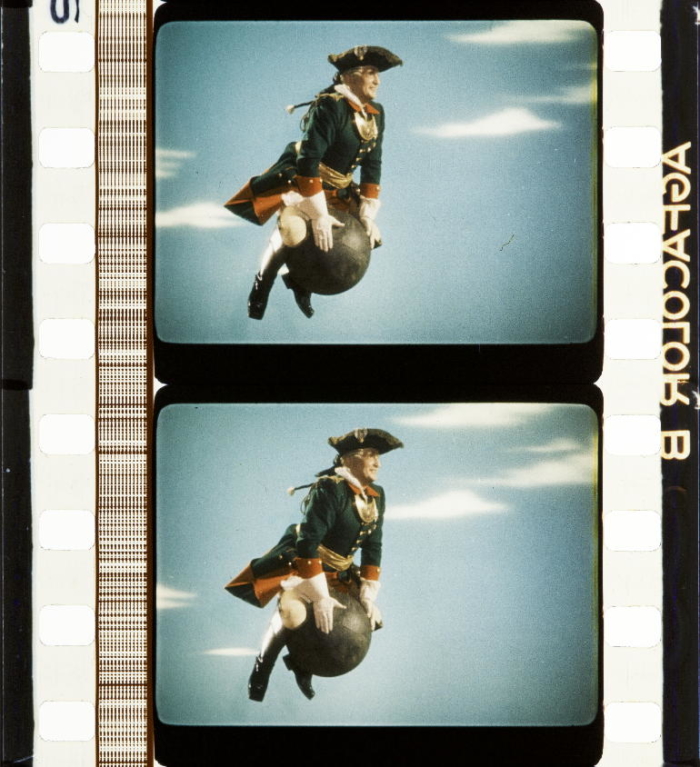
Agfacolor Neu / Agfacolor

Subtractive 3 color: chromogenic monopack, reversal (from 1936), negative/positive process (from 1939), still photography and film
“The New Agfacolor Process; Agfa Ansco Corp., Binghamton, N. Y. A survey of the history of monopack or multilayer photographic color processes is given, including the coloring methods of greatest importance at the present time. These are: (a) ...

640 Images in 21 Galleries