
-
![]() Pénichon, Sylvie (2013): Twentieth Century Colour Photographs. The Complete Guide to Processes, Identification & Preservation. London, Los Angeles: Thames & Hudson.
Pénichon, Sylvie (2013): Twentieth Century Colour Photographs. The Complete Guide to Processes, Identification & Preservation. London, Los Angeles: Thames & Hudson.
Category: Printing / dye-transfer▼×
- All Categories
- Bibliography
- Chromogenic monopack
- Chromolytic multilayer
- Color separation
- Double-coated / bi-pack
- Edge Codes and Identification
- Hand coloring
- Other
- Printing / pigment process
- Screen processes
- Spatial synthesis (multiple lenses, beam splitter)
- Stencil coloring (pochoir, Pathécolor)
- Temporal synthesis (rotary filters)
- Theory
- Tinting
- Toning
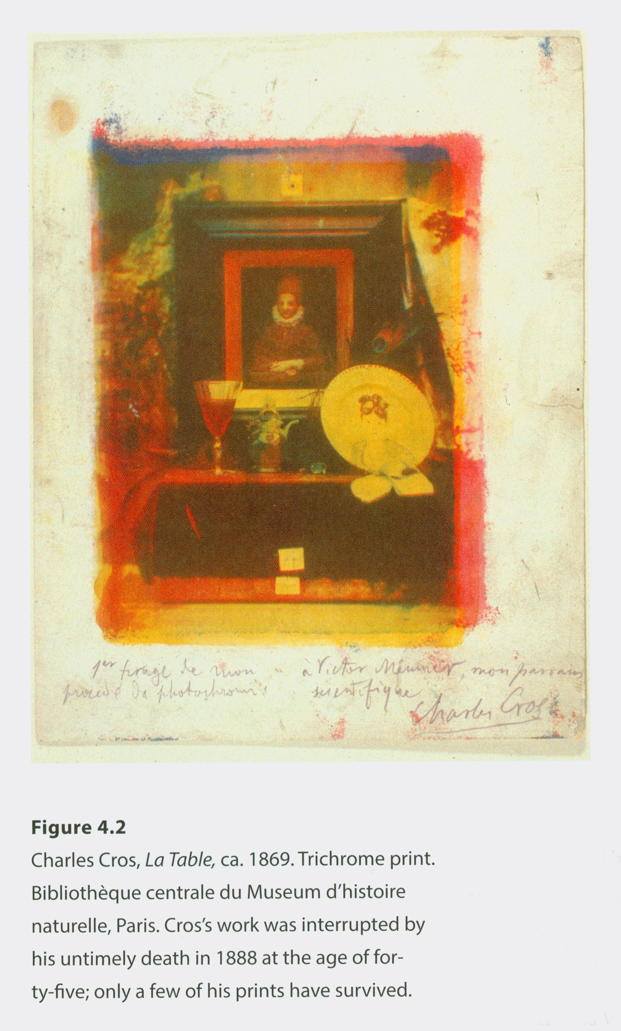
“In the imbibition process, a dye image is transferred from a gelatin relief image to a receiving layer made either of paper or film. Charles Cros described this method of “hydrotypie” transfer printing in 1880 and suggested it ...
Widely used in print media around 1900, the chromolithographic printing process was first adapted for the Laterna Magica and then utilized to produce early animated films primarily aimed at children. These films were usually very short ...
-
![]() [U-Boot]. Credit: Deutsches Filminstitut DIF. Photograph of the chromolithographic nitrate print by Barbara Flueckiger.
[U-Boot]. Credit: Deutsches Filminstitut DIF. Photograph of the chromolithographic nitrate print by Barbara Flueckiger.
- Box Der Film fürs Heimkino. Credit: Deutsches Filminstitut DIF. iPhone photo by Barbara Flueckiger.
- Box "Film for Home Cinema". Credit: Deutsches Filminstitut DIF. iPhone photo by Barbara Flueckiger.
- Box "Attention! Celluloid Film". Credit: Deutsches Filminstitut DIF. iPhone photo by Barbara Flueckiger.
- Boxes and loops. Credit: Deutsches Filminstitut DIF. iPhone photo by Barbara Flueckiger.
- Box and loops. Credit: Deutsches Filminstitut DIF. iPhone photo by Barbara Flueckiger.
- Film can for Chromolithographic Loop. Credit: Deutsches Filminstitut DIF. iPhone photo by Noemi Daugaard, SNSF Filmcolors
- Film can for Chromolithographic Loop. Credit: Deutsches Filminstitut DIF. iPhone photo by Noemi Daugaard, SNSF Filmcolors

119 Images in 3 Galleries
“In the imbibition process, a dye image is transferred from a gelatin relief image to a receiving layer made either of paper or film. Charles Cros described this method of “hydrotypie” transfer printing in 1880 and suggested it ...
-
![]() Cyan and magenta combined, third layer, yellow missing. Source: Meister Lucius & Brüning (1905): Pinatypie. Positiv-Verfahren für die Dreifarbenphotographie. Höchst am Main.
Cyan and magenta combined, third layer, yellow missing. Source: Meister Lucius & Brüning (1905): Pinatypie. Positiv-Verfahren für die Dreifarbenphotographie. Höchst am Main.
- Source: Pénichon, Sylvie (2013): Twentieth Century Colour Photographs. The Complete Guide to Processes, Identification & Preservation. London, Los Angeles: Thames & Hudson, p. 235.
- Source: Pénichon, Sylvie (2013): Twentieth Century Colour Photographs. The Complete Guide to Processes, Identification & Preservation. London, Los Angeles: Thames & Hudson, p. 235.
- Source: Pénichon, Sylvie (2013): Twentieth Century Colour Photographs. The Complete Guide to Processes, Identification & Preservation. London, Los Angeles: Thames & Hudson, p. 132.

4 Images
Similar to stenciling, the Handschiegl process was applied mechanically to manually defined image parts. Therefore it is an applied color process.
After the film was shot and edited, for each color applied a separate print was made. In contrast to ...
-
![]() Black-and-white with Handschiegl in Lights of Old Broadway (USA 1925, Monta Bell). Credit: Library of Congress. Photograph of the nitrate print by Barbara Flueckiger.
Black-and-white with Handschiegl in Lights of Old Broadway (USA 1925, Monta Bell). Credit: Library of Congress. Photograph of the nitrate print by Barbara Flueckiger.
- Credit: Geo. Willeman, Nitrate Film Vault Manager, Library of Congress. Film: Trail of '98 (USA 1929, Clarence Brown).
- Credit: Geo. Willeman, Nitrate Film Vault Manager, Library of Congress. Film: Trail of '98 (USA 1929, Clarence Brown).
- Credit: Paolo Cherchi Usai. Source: Cherchi Usai, Paolo (2000): Silent Cinema. London: BFI. Film: Greed (USA 1925, Erich von Stroheim).
- Credit: Geo. Willeman, Nitrate Film Vault Manager, Library of Congress. Film: Forbidden Fruit (USA 1921, Cecil B. DeMille).
- Credit: Geo. Willeman, Nitrate Film Vault Manager, Library of Congress. Film: Forbidden Fruit (USA 1921, Cecil B. DeMille).
- Source: Ryan, Roderick T. (1977): A History of Motion Picture Color Technology. London: Focal Press, p. 24.
- Credit: Geo. Willeman, Nitrate Film Vault Manager, Library of Congress. Film: Trail of '98 (USA 1929, Clarence Brown).

141 Images in 8 Galleries
“In the imbibition process, a dye image is transferred from a gelatin relief image to a receiving layer made either of paper or film. Charles Cros described this method of “hydrotypie” transfer printing in 1880 and suggested it ...
-
![]() Source: Pénichon, Sylvie (2013): Twentieth Century Colour Photographs. The Complete Guide to Processes, Identification & Preservation. London, Los Angeles: Thames & Hudson, p. 103.
Source: Pénichon, Sylvie (2013): Twentieth Century Colour Photographs. The Complete Guide to Processes, Identification & Preservation. London, Los Angeles: Thames & Hudson, p. 103.
- Source: Pénichon, Sylvie (2013): Twentieth Century Colour Photographs. The Complete Guide to Processes, Identification & Preservation. London, Los Angeles: Thames & Hudson, p. 277.
- Source: Pénichon, Sylvie (2013): Twentieth Century Colour Photographs. The Complete Guide to Processes, Identification & Preservation. London, Los Angeles: Thames & Hudson, p. 138.

3 Images
“In 1919 Kelley produced a series of coloured cartoons which were drawn by Pinto Colvig. In 1924 he introduced “Kelleycolor,” which was an imbibition process. Two colours were imbibed on a black-and-white key image. In 1926 he ...
-
![]() Credit: George Eastman House Motion Picture Department Collection. Film: The Old Family Toothbrush (USA 1925).
Credit: George Eastman House Motion Picture Department Collection. Film: The Old Family Toothbrush (USA 1925).

1 Image
The third Technicolor process used the same camera as process no. II to combine a pair of frames of the red and green record respectively on the b/w negative (see image). In contrast to the former process, however, the two images were printed on one side of the positive by the dye transfer or imbibition process.
-
![]() King of Jazz (USA 1930, John Murray Anderson). Credit: Library of Congress. Photographs of the Technicolor No. III dye-tranfer nitrate print from 1930 and 1931 by Olivia Kristina Stutz, ERC Advanced Grant FilmColors.
King of Jazz (USA 1930, John Murray Anderson). Credit: Library of Congress. Photographs of the Technicolor No. III dye-tranfer nitrate print from 1930 and 1931 by Olivia Kristina Stutz, ERC Advanced Grant FilmColors.
- Credit: Images courtesy of the Margaret Herrick Library. Film: Corrine Griffith in The Garden of Eden. Photograph: Barbara Flueckiger.
- Credit: George Eastman House Motion Picture Department Collection. Film: Buffalo Bill’s Last Fight (USA 1927, John W. Noble).
- Technicolor ad in Photoplay, 1930. Source: Photoplay, 1930, see Media History Digital Library
- Technicolor ad in Photoplay, 1930. Source: Photoplay, 1930, see Media History Digital Library
- Photomicrograph, 10x. Credit: Silvana Konermann.
- Photomicrograph, 20x. Credit: Silvana Konermann.
- Doctor X (USA 1932, Michael Curtiz). Credit: UCLA Film & Television Archive. Photographs of the Technicolor No. III dye-tranfer nitrate print by Barbara Flueckiger.
- Doctor X (USA 1932, Michael Curtiz). Credit: UCLA Film & Television Archive. Photographs of the Technicolor No. III dye-tranfer nitrate print by Barbara Flueckiger.

1298 Images in 38 Galleries
With the fourth Technicolor process the company dominated the market for color films from the mid-1930s to the 1950s.
In a special camera, three b/w negative films were exposed through a beam-splitter that consisted of two prisms to form a cube. One ...
-
![]() Credit: Image courtesy of the Academy Film Archive. Film: Gone with the Wind (USA 1939, Victor Fleming). Photograph by Barbara Flueckiger.
Credit: Image courtesy of the Academy Film Archive. Film: Gone with the Wind (USA 1939, Victor Fleming). Photograph by Barbara Flueckiger.
- Film: Samson and Delilah (US 1949, Cecil B. DeMille), trailer.
- Photomicrograph, 50x. Credit: Norbert Wey, Institute of Pathology, University of Zurich.
- Photomicrograph, 100x. Credit: Norbert Wey, Institute of Pathology, University of Zurich.

1881 Images in 65 Galleries
Three matrices in the subtractive primary colors are printed on the gelatin of the final print. Supposedly, the used dyes were particularly fast and able to prevent color bleeding. Pokorny started working on color cinematography in the 1920s, often ...
-
![]() Zaveshchanie/The Testament (7 June 1937). Credit: Courtesy of Nikolai Mayorov.
Zaveshchanie/The Testament (7 June 1937). Credit: Courtesy of Nikolai Mayorov.
- Zaveshchanie/The Testament (7 June 1937). Credit: Courtesy of Nikolai Mayorov. Credit: Courtesy of Nikolai Mayorov.
- The Miraculous Traffic Light (1938). Credit: courtesy of Nikolai Mayorov
- The Wolf and Seven Goat-Kids (1938). Credit: Courtesy of Nikolai Mayorov.
- The Fox and the Wolf (1937). Credit: Courtesy of Nikolai Mayorov.
- The Fox and the Wolf (1937). Credit: Courtesy of Nikolai Mayorov.

6 Images
-
![]() Technichrome, three-color print of bi-pack negatives, 1948. Credit: Gert Koshofer Collection. Sample No. 89. Photograph by Barbara Flueckiger
Technichrome, three-color print of bi-pack negatives, 1948. Credit: Gert Koshofer Collection. Sample No. 89. Photograph by Barbara Flueckiger

4 Images in 1 Gallery
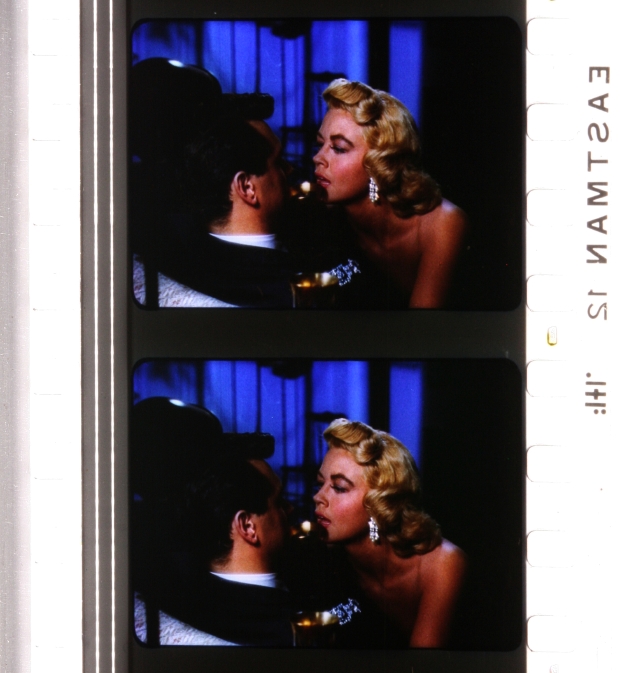
With the introduction of the chromogenic Eastmancolor negative/positive process it became possible to shoot with a normal one-strip camera. Three b/w color separations were produced from the Eastmancolor negative and printed by dye transfer on blank ...
-
![]() Written on the Wind (1956). Credit: Harvard Film Archive, item no. 3663. Photograph by Barbara Flueckiger.
Written on the Wind (1956). Credit: Harvard Film Archive, item no. 3663. Photograph by Barbara Flueckiger.
- Credit: Harvard Film Archive, item no. 1781. Film: Le Ballon rouge (1956). Photograph by Barbara Flueckiger.
- Credit: Harvard Film Archive, item no. 1781. Film: Le Ballon rouge (1956). Photograph by Barbara Flueckiger.
- Surface emulsion side, raking light (tungsten). Credit: Carsta Knaack, HTW Berlin. Film: Robin Hood, 1973.
- Photomicrograph 16x, raking light. Credit: Carsta Knaack, HTW Berlin. Film: Robin Hood, 1973.
- Photomicrograph, toplight on white background. Credit: Carsta Knaack, HTW Berlin. Film: Robin Hood, 1973.
- Photomicrograph 6,4x, top light on white background: picture and perforation area with spots of dye, yellow edge. Credit: Carsta Knaack, HTW Berlin. Film: Ssssss (1973).
- Photomicrograph 10x, top light on white background: picture and perforation area with spots of dye, yellow edge, yellow dye in frame line. Credit: Carsta Knaack, HTW Berlin. Film: Ssssss (1973).
- Photomicrograph 16x, top light on white background: sound track and perforation area with spots of dye, yellow edge. Credit: Carsta Knaack, HTW Berlin. Film: Ssssss (1973).
- Raking light: surface of picture and perforation area with small spots of dye, yellow edge. Credit: Carsta Knaack, HTW Berlin. Film: Ssssss (1973).
- Surface emulsion side, raking light (tungsten). Credit: Carsta Knaack, HTW Berlin. Film: Robin Hood, 1973.
- Vertigo (USA 1958, Alfred Hitchcock). Credit: Harvard Film Archive, item no. 246. HDR photograph by Barbara Flueckiger.
2261 Images in 41 Galleries
In 1994, Technicolor announced the development of an enhanced dye-transfer process. This process became effective in June 1997. There was no official denomination, so “Technicolor No. VI” is not to be confused with statements from the mid ...
 Timeline of Historical Film Colors by Barbara Flueckiger is licensed under a Creative Commons Attribution-NonCommercial-NoDerivatives 4.0 International License.
Quote as Flueckiger, Barbara (2012 ff.): Timeline of Historical Film Colors. (= https://filmcolors.org/).
Download BibTex