Pantachrom

Subtractive 3 color: Bi-pack and lenticular film recording, duplitized film with toning and silver dye-bleach
“In October, Eggert of the Agfa Research Department, read a paper at the Berlin meeting of the Deutsche Gesellschaft für photographische Forschung, on the Pantochrom subtractive lenticular bipack tricolor process. (Fig. 1) The green and blue ...

19 Images in 3 Galleries

Warner-Powrie

Additive 3 color: Line screen
“The Warner-Powrie process patented in 1905 was the earliest commercial process using a screen made with bichromated colloid. A glass plate was thinly coated with bichromated gelatin or fish glue and exposed to light through a screen having ...

Joly

Additive 3 color: line screen process, still photography and film
“In 1894 Professor John Joly of Dublin patented a process for producing a screen of red, green and blue-violet lines by ruling them on a gelatin-coated glass plate. Joly used ruling machines of great accuracy, with drawing pens trailed across ...

7 Images

Johnsons Colour Screen

Additive 3 color: regular mosaic screen, separate system, still photography
“Johnsons Colour Screen (1953–ca. 1954): pattern virtually identical to Paget Color Screen, with lines of red and blue squares alternated with lines of green and blue squares, approximately 350 to the inch (Fig. 2.55). The lines are at a ...

1 Image

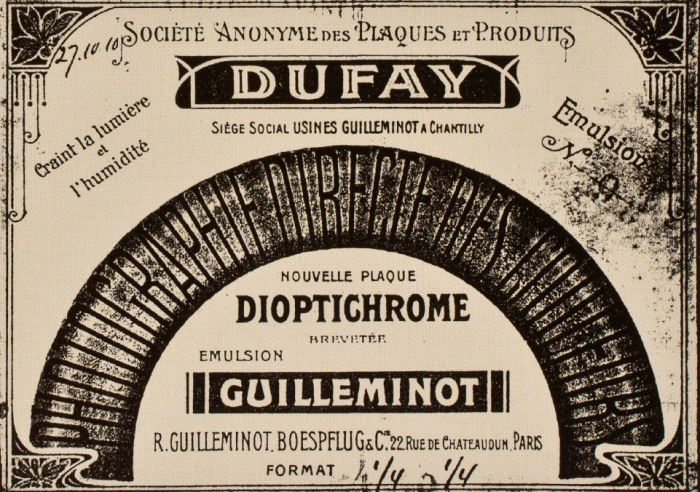
Dufay / Dioptichrome Plate (sometimes incorrectly referenced as Dioptochrome)

Additive 2-4 color: line screen plate (réseau), still photography and early experiments with film
(see detail page on Dufaycolor)

8 Images

Dufay / Dioptichrome

Additive 3 color: regular mosaic screen, separate system, still photography
“In 1907 the French lawyer Louis Dufay (1874-1936) patented a system whose screen pattern was obtained by the combined use of dichromated colloids, greasy printing inks, and imbibition. To take a photograph, the screen was mounted in a metallic ...

1 Image

Dufay / Dioptichrome-B

Additive 3 color: regular mosaic screen, combined system, still photography
“In 1907 the French lawyer Louis Dufay (1874-1936) patented a system whose screen pattern was obtained by the combined use of dichromated colloids, greasy printing inks, and imbibition. To take a photograph, the screen was mounted in a metallic ...

1 Image

Versicolor-Dufay

Additive 3 color: line screen plate, still photography and film
“The most successful of all the screen processes was the one initiated by Louis Dufay. Today the product is known as Dufaycolor, but it was first introduced about 1910 as the Dioptichrome plate. The first Dufay patents were assigned to an ...

Dufaycolor reversal

Additive 3 color: Line screen (réseau), 16 mm, reversal
(see detail page on Dufaycolor)

Spicer-Dufay

Additive 3 color: Line screen (réseau), 35 mm reversal
For a description of Spicer-Dufay see detail page on Dufaycolor)

78 Images in 2 Galleries

Dufaycolor

Additive 3 color: Line screen (réseau), 35 mm and 16 mm, reversal and negative-positive stock, still photography and film

Dufaycolor was a regular line screen process whereby the incident light was filtered through a pattern of tiny color patches created by lines in red, green and blue, the so called réseau.

231 Images in 9 Galleries

Lumière Alticolor

Additive 3 color: mosaic screen, combined system, still photography
“Lumière Alticolor (1952–1955): rolls and pack films on celluloid base. Alticolor starch grains are smaller but of less regular shape than those used in Filmcolor (Fig. 2.74). There are no black pigment particles; therefore, Alticolor ...

1 Image

Lumière Filmcolor

Additive 3 color: mosaic screen, combined system, still photography
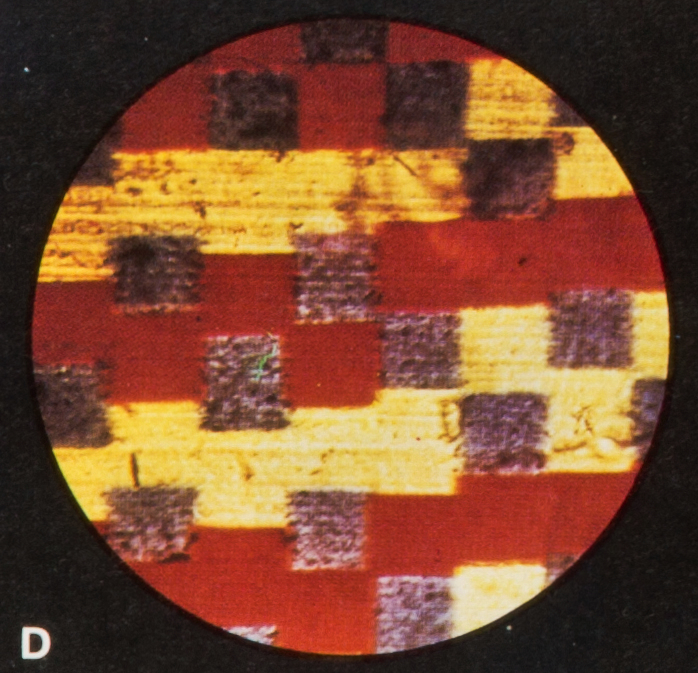
“Lumière Filmcolor (1931–1953): sheet films (only) on celluloid base (Fig. 2.69). Individual colored grains cannot be seen with the naked eye, but clumps of grains of the same color give the image a pointillist effect. Filmcolor starch ...

1 Image

Lumière Lumicolor

Additive 3 color: mosaic screen, combined system, still photography
“Lumière Lumicolor (1933–1953): rolls and pack films on celluloid base. Individual colored grains cannot be seen with the naked eye, but clumps of grains of the same color give the image a pointillist effect (Fig. 2.71). Starch grains ...

1 Image

Lenticular Screen

Additive 3 color: lenticular screen, still photography and film
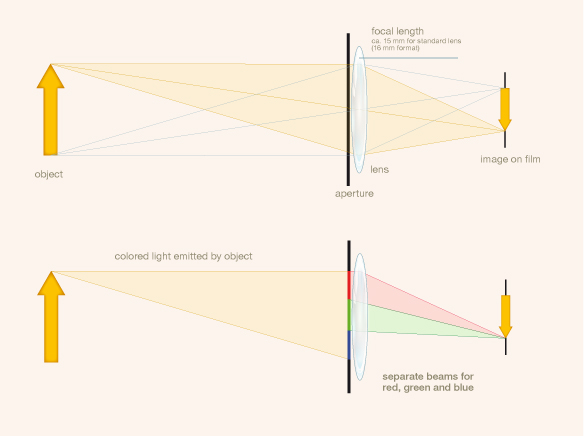
“Every element of a cross-lined screen acts as a pinhole camera, and reproduces an image of the aperture of the objective in whose rear focal plane it is placed. Thus, when using a square stop, the dots in the halftone produced will be square ...

4 Images

Krayn

Additive 3 color: line screen and mosaic, still photography and film
“Another method of producing a line screen was patented in 1904 by the German Robert Krayn, and was demonstrated by him in November 1907. Krayn stained very thin celluloid sheets red, green and blue, and cemented them interleaved to form a ...

7 Images

Berthon

Additive 3 color: Lenticular screen
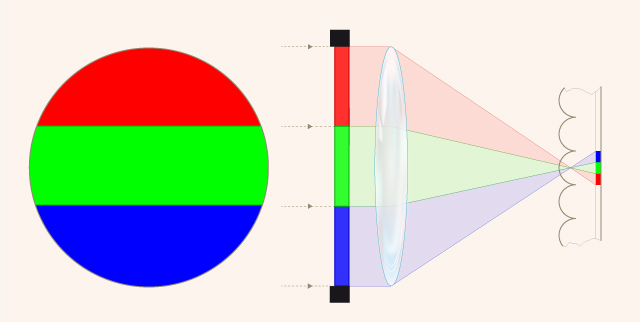
“R. Berthon patented the use of a lens diaphragm with three apertures, covered respectively with red, green and blue-violet filters, and a sensitive surface on a support, the other side of which was impressed with hemi-spherical, transparent, ...

4 Images

Berthon-Siemens / Siemens-Berthon / Siemens-Perutz-Verfahren / Opticolor

Additive 3 color: Lenticular screen

5 Images

Kesdacolor

Subtractive 2 color: Line screen filter, duplitized film stock
”The process as illustrated in USP 1431309 was a two-color additive process, but it is stated that it could be a three- or four-color process. For the original photography, the negative was exposed through a line screen composed of alternate bands ...

1 Image