Bocca-Rudatis

Additive 3 color: lenticular screen
The procedure for obtaining the lenticular elements in relief required a series of steps: starting from three black and white positive color separations, obtained with any of the available methods, three matrices were printed, from which the film to ...

1 Image

Autochrome

Additive 3 color: mosaic screen, still photography and film
“The Autochrome process was the first fully practical single-plate colour process to reach the photographic public. It was easy to use. The plate was loaded into a conventional holder, glass to the front. The exposure was made through a yellow ...

16 Images

Autochrome film / Cinécolor

Additive 3 color: mosaic screen
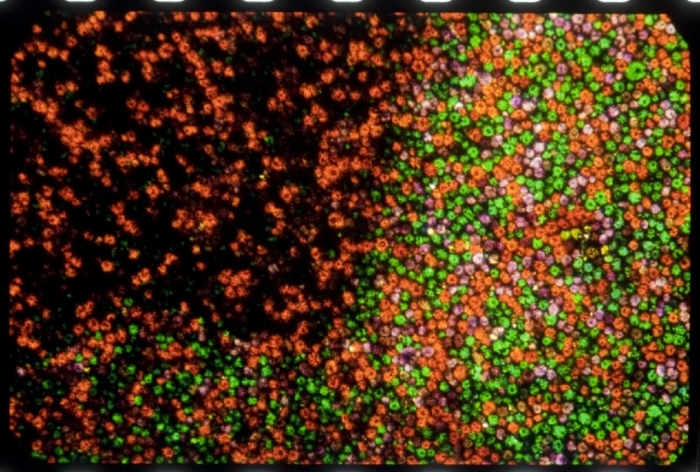
Several attempts were made to apply the Autochrome process invented by the Lumière brothers to motion pictures. Transparent potato starch grains with a diameter of 15–20 micrometer were colored in the additive primaries red, green and blue. The ...

27 Images in 2 Galleries

Keller-Dorian

Additive 3 color: Lenticular screen

14 Images in 2 Galleries

Kodacolor / Keller-Dorian Color

Additive 3 color: Lenticular screen
“LENTICULAR PROCESS In 1896 R. E. Liesegang (Ahriman, 1896) suggested a photographic color process based upon the use of banded filters in the camera aperture. […] In 1909 R. Berthon (British Patent 10,611; see also Berthon, 1910a, b) ...

35 Images in 2 Galleries

New Agfa Color Plate

Additive 3 color: mosaic screen, combined system, still photography
“New Agfa Color Plate (1923–1932): colored particles very small and not visible to the naked eye, but clumps of particles of the same color give the image a pointillist effect (Fig. 2.62). Unlike with the autochromes, in which the grains ...

1 Image

Agfacolor Plate

Additive 3 color: mosaic screen, combined system, still photography
“Agfacolor Plate (1932-1938): colored particles very small and not visible to the naked eye; clumps of particles of the same color give the image a pointillist effect (Fig. 2.63). Unlike with the autochromes, in which the grains are remarkably ...

1 Image

Agfacolor Film

Additive 3 color: mosaic screen, combined system, still photography
“Agfacolor Film (1932–1934): individual colored particles cannot be seen with the naked eye, but clumps of grains of the same color give the image a pointillist effect (Fig. 2.70). There is no black pigment filler. The film has a thick base ...

1 Image

Agfacolor Ultra Film

Additive 3 color: mosaic screen, combined system, still photography and 35mm MPF (1935–1936)
“Agfacolor Ultra Film (1934–1941): individual colored grains cannot be seen with the naked eye, but clumps of grains of the same color give the image a pointillist effect (Fig. 2.72). There is no black pigment filler. The film has a thick ...

1 Image

Agfacolor Ultra Plate

Additive 3 color: mosaic screen, combined system, still photography
“Agfacolor Ultra Plate (1936–1938): colored particles very small and not visible to the naked eye, but clumps of particles of the same color give the image a pointillist effect (Fig. 2.65). Unlike with the autochromes, in which the grains are ...

1 Image

Agfacolor Screen Plate

Additive 3 color: mosaic screen, still photography and film
“During the war, an important new screen plate appeared, based on patents taken out by J. H. Christensen in 1908. He proposed to make a concentrated solution of gum in alcohol. Divided into three parts, the gum solutions were dyed red, green ...

11 Images

Thomson Color

Additive 3 color: Lenticular screen

3 Images

Opticolor

Additive 3 color: Lenticular screen

Polavision

Diffusion: Line screen, super-8 mm

14 Images

Polachrome

35mm Slide Film

4 Images in 1 Gallery

Lignose Naturfarbenfilm

Additive 3 color: mosaic screen, still photography and film

2 Images

Kislyn color

Additive 3 color: Lenticular screen

1 Image

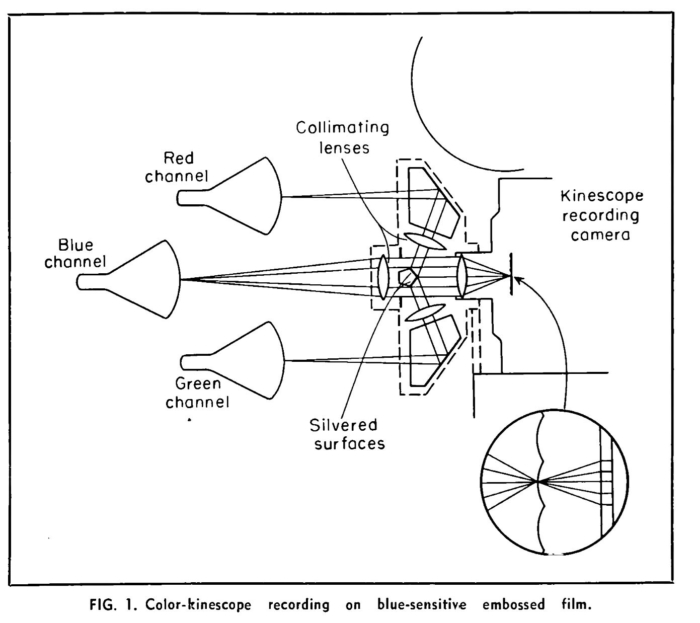
Eastman Embossed Kinescope Recording Film

Additive 3 color: Lenticular screen

2 Images

Eastman Lenticular Print Film Type 5306

Additive 3 color: Lenticular screen