Hérault Trichrome

Additive 3 color: Alternately stained in red, green and blue
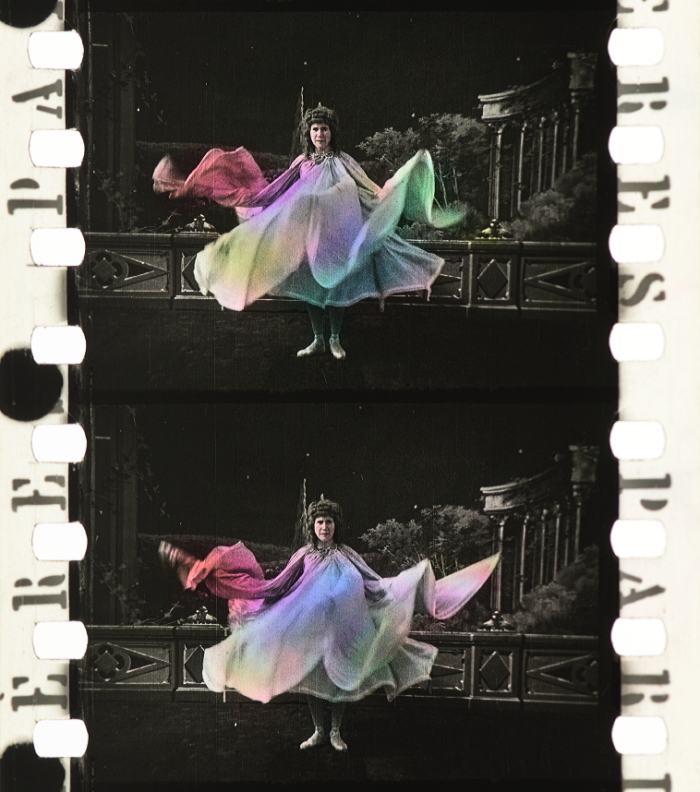
“The Hérault Trichrome process was demonstrated in Paris on 1 October 1926, with three films made by A. Rodde — a fashion show, a documentary on Brittany and a tableau of the Legend of the King of Ys. Hérault Trichrome was an extension of ...

12 Images in 1 Gallery

Heliochromy direct positive

Direct color photography: still photography

1 Image

Heliochromy color separation

Subtractive 3 color: assembly process, pigment process, still photography
“Carbon printing was originally a monochrome process. It was invented and patented by Alphonse Poitevin (1819–82) in 1855 and was the first practical printing method with pigments. After Poitevin, the carbon process was patented extensively ...

Harriscolor

Subtractive 2 color: Beam-splitter, single-coated
“Harriscolor In this method as in other methods of color photography, independent color value negatives are first obtained. The Harriscolor process can employ one of the following two methods: Either a camera wherein the dividing light prisms ...

3 Images

Harmonicolor

Subtractive 2 color: Bi-pack, double-coated
“Harmonicoior was developed by French chemist Maurice Combes. It was first formally demonstrated in London by Harmonicoior Films Ltd, of 4 Great Winchester Street, on the 23 March 1936 at the Curzon Soho with the film Talking Hands, produced at ...

Handschiegl / DeMille-Wyckoff / Wyckoff Process

Applied color: Imbibition
Similar to stenciling, the Handschiegl process was applied mechanically to manually defined image parts. Therefore it is an applied color process. After the film was shot and edited, for each color applied a separate print was made. In contrast to ...

142 Images in 8 Galleries

Hand coloring

Applied colors: Manual application

Coloring of individual frames by the use of very fine brushes. The process was previously applied to lantern slides. Any water based translucent dye was suited for the process, most often the coloring was done with acid dyes.

439 Images in 20 Galleries

Gualtierotti or Cicona e Gualtierotti

Additive two-color: optical system, filters, 64mm negative.
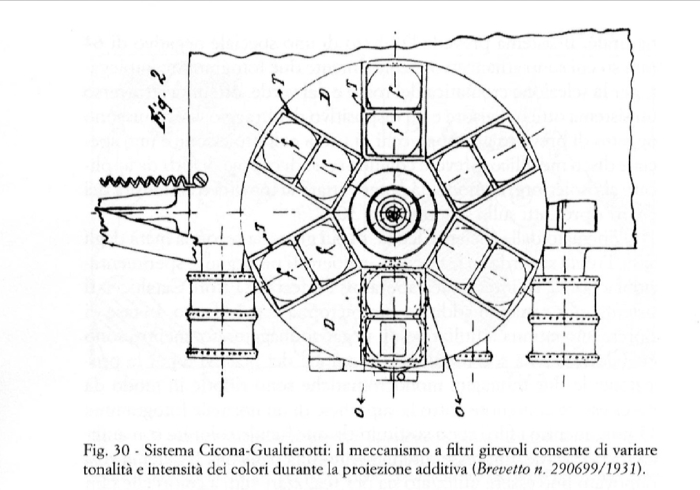
Unlike other additive systems invented in previous years, Gualtierotti tried to avoid the phenomenon of chromatic aberration inherent in the use of multiple lenses or the creation of successive separation records. The proposed solution was based on ...

1 Image

Gorsky Process

Gilmore Color

Additive 2 color: Rotary filter
“Gilmore’s two-color additive process was based on a patent granted to F. E. Ives in 1918. A unique optical system exposed two images in pairs, and quarter-turned them lengthwise side by side on standard 35 mm film stock. One of the images was ...

1 Image

Gevaert Positif Color

Applied colors: Pretinted film

Gevacolor T 6 82

Subtractive 3 color: Chromogenic monopack

Gevacolor T 6 80

Subtractive 3 color: Chromogenic monopack

Gevacolor T 6 55

Subtractive 3 color: Chromogenic monopack

Gevacolor T 6 54

Subtractive 3 color: Chromogenic monopack

Gevacolor T 6 53

Subtractive 3 color: Chromogenic monopack

Gevacolor T 6 52

Subtractive 3 color: Chromogenic monopack

Gevacolor T 6 51

Subtractive 3 color: Chromogenic monopack

Gevacolor Print Film T 9 86

Subtractive 3 color: Chromogenic monopack

Gevacolor Print Film T 9 85

Subtractive 3 color: Chromogenic monopack

Gevacolor Positive Film T 9 54

Subtractive 3 color: Chromogenic monopack

Gevacolor Positive Film T 9 53

Subtractive 3 color: Chromogenic monopack

Gevacolor Negative

Subtractive 3 color: Chromogenic monopack

4 Images in 1 Gallery

Gevachrome

Subtractive 3 color: Chromogenic monopack, reversal 16mm

10 Images in 1 Gallery

Gaumont Chronochrome

Additive 3 color: Sawn-off lenses and filters, simultaneous taking and projection
“The competition between Kinemacolor and other rival systems was partially stimulated by a Utopian faith in the potential of film technology to achieve ‘natural colour’, reality ‘as it is’ being the goal of the cinematic ...

12 Images in 2 Galleries

Gasparcolor OR Gaspar Color

Subtractive 3 color: silver dye-bleach multilayer print film, still photography and film

Gasparcolor was the first three-color multi-layer monopack film available for practical use. It was a double-coated print film with a cyan layer on one side and two layers dyed magenta and yellow on the other side (see illustrations).

398 Images in 24 Galleries

Gasparcolor Opaque (1944–ca. 1952) / Bauchet Color Paper (1953–1955)

Subtractive 3 color: dye destruction process, silver dye-bleach, still photography and film
“In 1944 he launched a new reflection printing material on a white-pigmented acetate base called Gasparcolor Opaque, which was, initially and for the duration of the war, available only to the U.S. military. The processing of Gasparcolor Opaque ...

2 Images

Gaspar Color subtractive 2 color

Subtractive 2 color: Silver dye-bleach

Fullcolor

Subtractive 2 colors: Bi-pack, duplitized film

Fujifilm peel-apart films

Subtractive 3 color: dye diffusion process, still photography
“The company also launched its first peel-apart color print films, Fuji FP-100 and Fuji FP-800, which were compatible with Polaroid cameras and camera backs. The image formation of the new peel-apart films was similar to that of Fuji integral ...