Agfacolor Negative type G was a chromogenic camera negative balanced for Tungsten illumination.
“In 1930 Mannes and Godowsky were invited to join the staff of the Kodak Research Laboratory, where they concentrated on methods of processing multilayer films, while their colleagues worked out ways of manufacturing them. The result was the new Kodachrome film, launched in 1935. Three very thin emulsion layers were coated on film base, the emulsions being sensitised with non-wandering dyes to red, green and blue light, the red-sensitive layer being at the bottom.” (Coe, Brian (1978): Colour Photography. The First Hundred Years 1840-1940. London: Ash & Grant, pp. 121 ff.)
Gasparcolor was the first three-color multi-layer monopack film available for practical use. It was a double-coated print film with a cyan layer on one side and two layers dyed magenta and yellow on the other side (see illustrations).
Dufaycolor was a regular line screen process whereby the incident light was filtered through a pattern of tiny color patches created by lines in red, green and blue, the so called réseau.
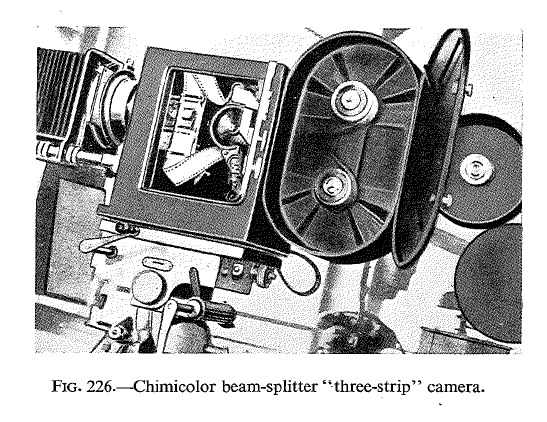
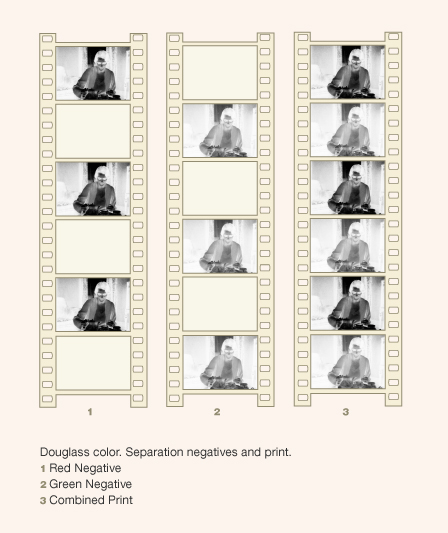
The third Technicolor process used the same camera as process no. II to combine a pair of frames of the red and green record respectively on the b/w negative (see image). In contrast to the former process, however, the two images were printed on one side of the positive by the dye transfer or imbibition process.
Agfacolor B negative on Agfacolor positive. Credit: Národní filmový archiv / National Film Archive, Prague. Film: Tábor (Oldřich Mirad, Czechoslovakia 1953). Photograph by Barbara Flueckiger.
Pénichon, Sylvie (2013): Twentieth Century Colour Photographs. The Complete Guide to Processes, Identification & Preservation. London, Los Angeles: Thames & Hudson, p. 165.
Pénichon, Sylvie (2013): Twentieth Century Colour Photographs. The Complete Guide to Processes, Identification & Preservation. London, Los Angeles: Thames & Hudson, p. 89.
Original Agfacolor negative G. Credit: Národní filmový archiv / National Film Archive, Prague. Film: Neposlušný zajíček (German title Klein, aber Oho!, Horst von Möllendorff, Czechoslovakia 1944).
Agfacolor B original negative. Credit: Národní filmový archiv / National Film Archive, Prague. Film: Jan Roháč z Dubé (Czechoslovakia 1947, Vladimír Borsky).
Pénichon, Sylvie (2013): Twentieth Century Colour Photographs. The Complete Guide to Processes, Identification & Preservation. London, Los Angeles: Thames & Hudson, p. 145.
Pénichon, Sylvie (2013): Twentieth Century Colour Photographs. The Complete Guide to Processes, Identification & Preservation. London, Los Angeles: Thames & Hudson, p. 142.
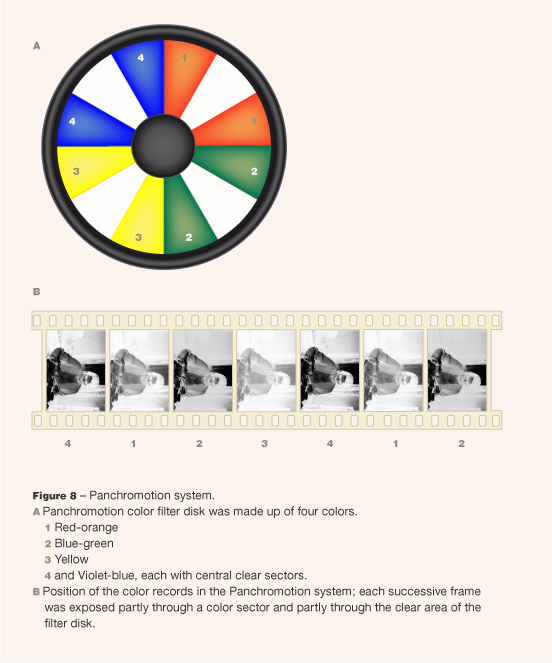
Source: Ryan, Roderick T. (1977): A History of Motion Picture Color Technology. London: Focal Press.
Agfa Pantachrom. Source: Arens, Hans; Heymer, Gerd (1939): Die „Agfa-Farbentafel für Farbenphotographie“. In: Veröffentlichungen des wissenschaftlichen Zentral-Laboratoriums der photographischen Abteilung Agfa, Vol. 6, 1939, pp. 225-229. Leipzig: Hirzel. Photograph by Martin Weiss, ERC Advanced Grant FilmColors.
Münchhausen (Josef von Báky, Germany 1943). Credit: Bundesarchiv Filmarchiv and Friedrich-Wilhelm-Murnau-Stiftung. Photographs of the Agfacolor safety print (acetate) by Barbara Flueckiger.
Credit: Geo. Willeman, Nitrate Film Vault Manager, Library of Congress. Film: Captain Calamity (1936)
Zaveshchanie/The Testament (7 June 1937). Credit: Courtesy of Nikolai Mayorov.
Principle of capturing and projecting lenticular film. Credit: Joakim Reuteler and Rudolf Gschwind, Digital Humanities Lab, University of Basel, Switzerland. Illustration by Sarah Steinbacher, Multimedia & E-Learning-Services, University of Zurich.
Pénichon, Sylvie (2013): Twentieth Century Colour Photographs. The Complete Guide to Processes, Identification & Preservation. London, Los Angeles: Thames & Hudson, p. 74.
Credit: Lichtspiel / Kinemathek Bern. Film: New York, Taufe und Ausflug (CH 1954, Donald Brun).
Credit: Illustration by Sarah Steinbacher, Multimedia & E-Learning-Services, University of Zurich. Source: Ryan, Roderick T. (1977): A History of Motion Picture Color Technology. London: Focal Press.
Pénichon, Sylvie (2013): Twentieth Century Colour Photographs. The Complete Guide to Processes, Identification & Preservation. London, Los Angeles: Thames & Hudson, p. 282.
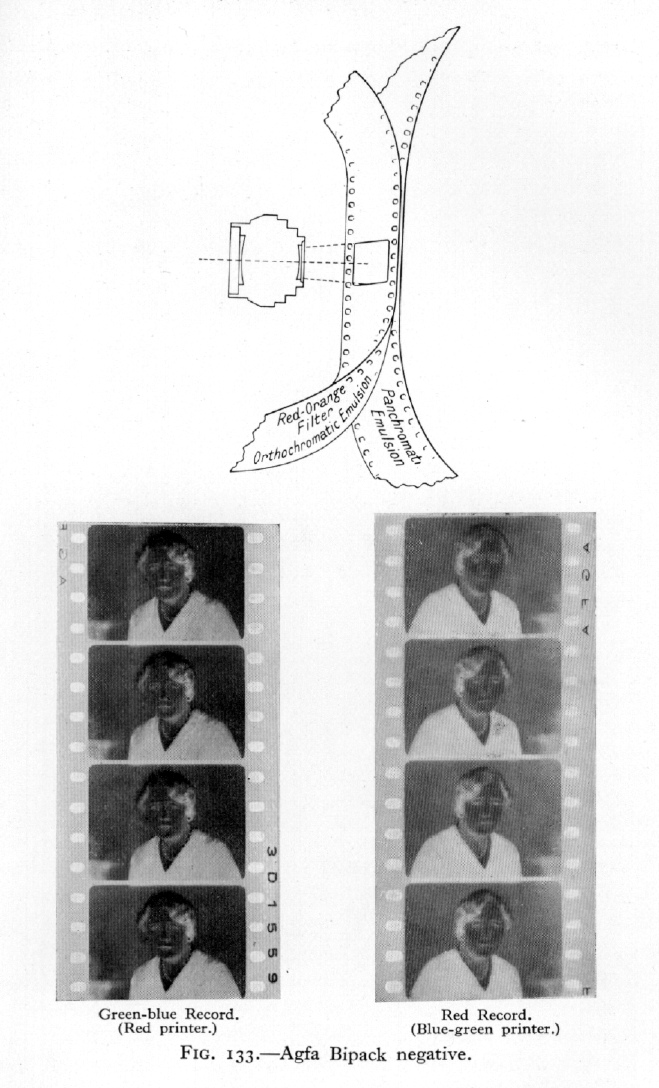
Source: Klein, Adrian Bernhard (Cornwell-Clyne) (1940): Colour Cinematography. Boston: American Photographic Pub. Co.
Pénichon, Sylvie (2013): Twentieth Century Colour Photographs. The Complete Guide to Processes, Identification & Preservation. London, Los Angeles: Thames & Hudson, p. 140.
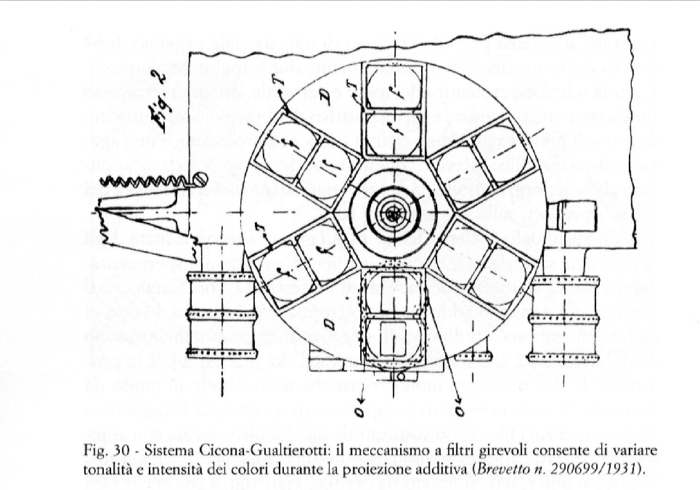
Cross-section of the optical system displaying the different lenses, the prism and the four filters. Source: Pierotti, Federico (2016): Un'archeologia del colore nel cinema italiano. Dal Technicolor ad Antonioni. Pisa: Edizioni ETS, p. 71.
Credit: Illustration by Sarah Steinbacher, Multimedia & E-Learning-Services, University of Zurich. A History of Motion Picture Color Technology.
Credit: Illustration by Sarah Steinbacher, Multimedia & E-Learning-Services, University of Zurich. Source: Ryan, Roderick T. (1977): A History of Motion Picture Color Technology. London: Focal Press.
Pénichon, Sylvie (2013): Twentieth Century Colour Photographs. The Complete Guide to Processes, Identification & Preservation. London, Los Angeles: Thames & Hudson, p. 76.
Credit: Geo. Willeman, Nitrate Film Vault Manager, Library of Congress. Film: The Magic Isle.
Pénichon, Sylvie (2013): Twentieth Century Colour Photographs. The Complete Guide to Processes, Identification & Preservation. London, Los Angeles: Thames & Hudson, p. 76.
Uit het rijk der kristallen (NDL 1927?, J.C. Mol). Credit: EYE Film Museum. Photographs of the Dufaycolor and Gasparcolor nitrate print by Barbara Flueckiger.
Projection of lenticular film in Bocca-Rudatis. Refraction of light beams through lens. Source: Pierotti, Federico (2016): Un'archeologia del colore nel cinema italiano. Dal Technicolor ad Antonioni. Pisa: Edizioni ETS, p. 81.
Reversal Colour Positive. Credit: Courtesy of BFI National Archive. Photograph by Barbara Flueckiger. Film: A Colour Box (GB 1935, Len Lye).
Credit: Illustration by Sarah Steinbacher, Multimedia & E-Learning-Services, University of Zurich. Source: Klein, Adrian Bernhard (Cornwell-Clyne) (1940): Colour Cinematography. Boston: American Photographic Pub. Co.
Source: Dubray, J.A. (1933): The Morgana Process In: Journal of the Society of Motion Picture Engineers 21,5, 1933, pp. 403-412.
Color reconstruction. Credit: Gisela Harich-Hamburger, Diplomrestauratorin (FH).
Credit: Harvard Film Archive, George Huizinga Collection, item no. 10454. Film: Prehistoric Women (1951).
Source: Klein, Adrian Bernhard (Cornwell-Clyne) (1940): Colour Cinematography. Boston: American Photographic Pub. Co.
Source: Pénichon, Sylvie (2013): Twentieth Century Colour Photographs. The Complete Guide to Processes, Identification & Preservation. London, Los Angeles: Thames & Hudson, p. 72.
Source: Coe, Brian (1981): The History of Movie Photography. Westfield, N.J.: Eastview Editions. Film: Pagliacci (1937).
Source: Pénichon, Sylvie (2013): Twentieth Century Colour Photographs. The Complete Guide to Processes, Identification & Preservation. London, Los Angeles: Thames & Hudson, p. 76.
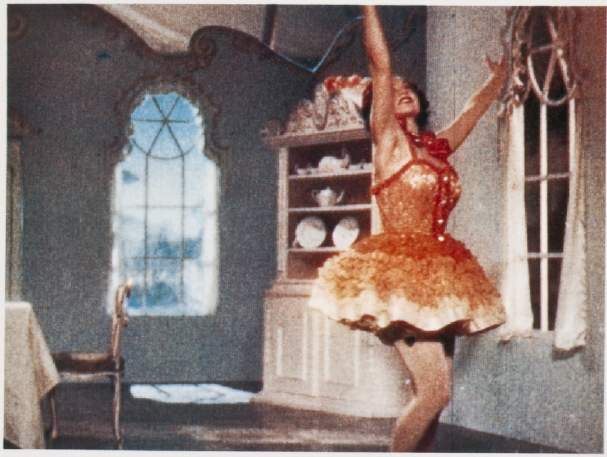
Credit: Image courtesy of the Academy Film Archive. Film: Gone with the Wind (USA 1939, Victor Fleming). Photograph by Barbara Flueckiger.
Pénichon, Sylvie (2013): Twentieth Century Colour Photographs. The Complete Guide to Processes, Identification & Preservation. London, Los Angeles: Thames & Hudson, p. 281.
Magnification of an image area. Source: Eggert, John (1932): Kurzer Überblick über den Stand der Farbenkinematographie. Bericht über den VIII. Internationalen Kongress für wissenschaftliche und angewandte Photographie, Dresden 1931, pp. 214-222. Leipzig: J. A. Barth.
Pénichon, Sylvie (2013): Twentieth Century Colour Photographs. The Complete Guide to Processes, Identification & Preservation. London, Los Angeles: Thames & Hudson, p. 74.
Source: Cornwell-Clyne, Adrian (1951): Colour Cinematography. London: Chapman & Hall.
Mysore Yesterday and Tomorrow Credit: Image courtesy of the 20th Century Fox Collection at the Academy Film Archive. Photograph: Barbara Flueckiger.
Screenshot from Mayorov, Nikolai (2012): Soviet Colours. Translated by Birgit Beumers. In: Studies in Russian & Soviet Cinema, 6:2, pp. 241–255. doi: 10.1386/srsc.6.2.241_1 Courtesy of Nikolai Mayorov.
Rota Farbenfilm Samples (Kodak Film Samples Collection). Credit: National Science and Media Museum Bradford. Photographs of the Rotacolor Prints by Josephine Diecke, SNSF project Film Colors. Technologies, Cultures, Institutions and Joëlle Kost, ERC Advanced Grant FilmColors.
Dyes of Brewster color. Credit: Brian Pritchard.
Credit: Cinémathèque française, conservatoire des techniques, Paris.
Credit: Geo. Willeman, Nitrate Film Vault Manager, Library of Congress. Film: The Sweetest Story.
Strange Birds (US 1930, Mack Sennett). Credit: Library of Congress. Photograph of the nitrate print: Barbara Flueckiger
Source: Pénichon, Sylvie (2013): Twentieth Century Colour Photographs. The Complete Guide to Processes, Identification & Preservation. London, Los Angeles: Thames & Hudson, p. 70.
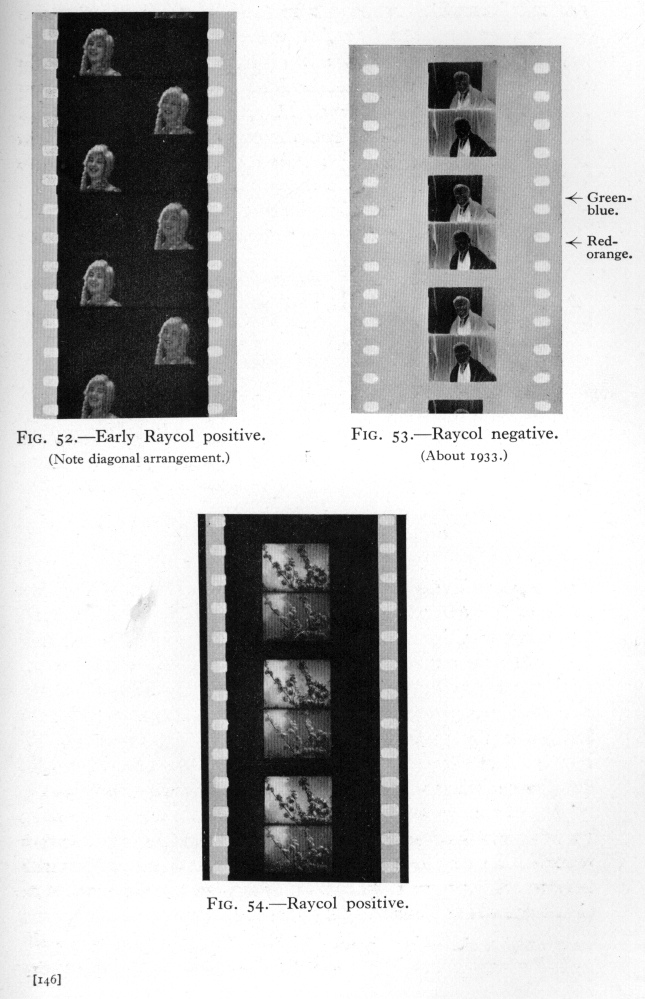
Source: Klein, Adrian Bernhard (Cornwell-Clyne) (1940): Colour Cinematography. Boston: American Photographic Pub. Co.
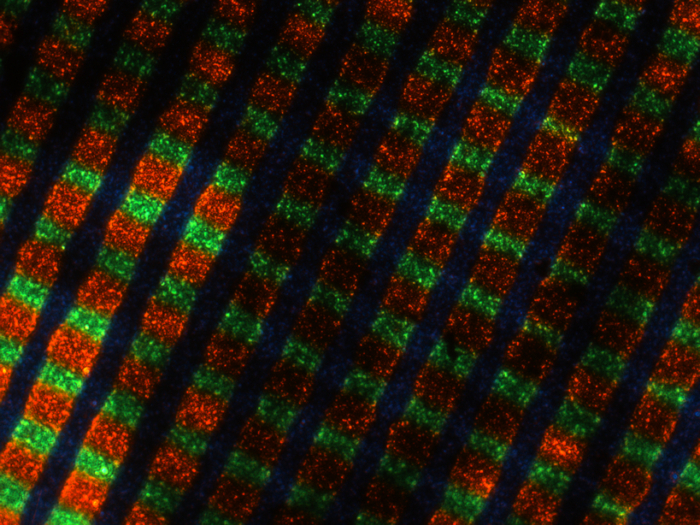
Magnification, 20x. Credit: photomicrograph by Silvana Konermann.
Pénichon, Sylvie (2013): Twentieth Century Colour Photographs. The Complete Guide to Processes, Identification & Preservation. London, Los Angeles: Thames & Hudson, p. 138.
Pénichon, Sylvie (2013): Twentieth Century Colour Photographs. The Complete Guide to Processes, Identification & Preservation. London, Los Angeles: Thames & Hudson, p. 106.
Pénichon, Sylvie (2013): Twentieth Century Colour Photographs. The Complete Guide to Processes, Identification & Preservation. London, Los Angeles: Thames & Hudson, p. 137.
Credit: Technicolor Collection. George Eastman House Moving Image Department. Photograph by Barbara Flueckiger.
Source: Klein, Adrian Bernhard (Cornwell-Clyne) (1940): Colour Cinematography. Boston: American Photographic Pub. Co.
Iridescence on Multicolor print, reflection properties. Credit: Library of Congress. Photograph by Barbara Flueckiger
Credit: Paolo Cherchi Usai. Source: Cherchi Usai, Paolo (2000): Silent Cinema. London: BFI.
Pénichon, Sylvie (2013): Twentieth Century Colour Photographs. The Complete Guide to Processes, Identification & Preservation. London, Los Angeles: Thames & Hudson, p. 105.
Kodacolor lenticular filter for the projector. Lichtspiel / Kinemathek Bern.
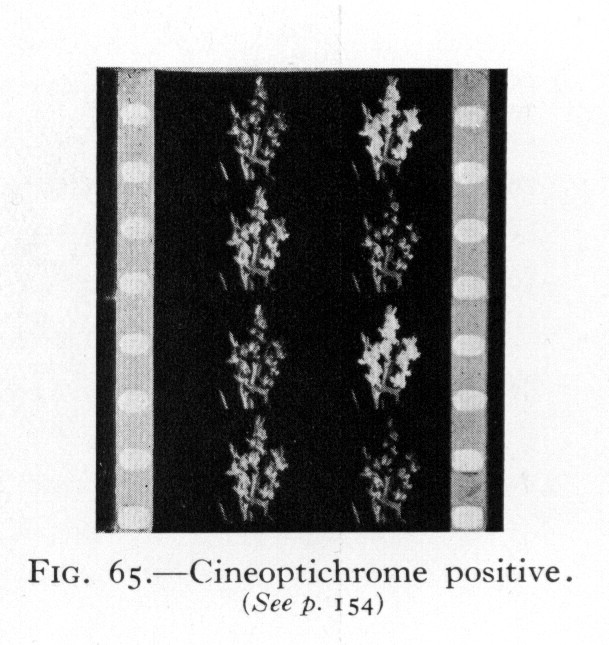
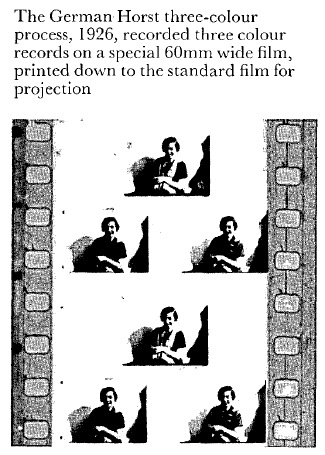
Source: Eggert, John (1932): Kurzer Überblick über den Stand der Farbenkinematographie. Bericht über den VIII. Internationalen Kongress für wissenschaftliche und angewandte Photographie, Dresden 1931, pp. 214-222. Leipzig: J. A. Barth.
Source: Pénichon, Sylvie (2013): Twentieth Century Colour Photographs. The Complete Guide to Processes, Identification & Preservation. London, Los Angeles: Thames & Hudson, p. 74.
Credit: Geo. Willeman, Nitrate Film Vault Manager, Library of Congress.
King of Jazz (USA 1930, John Murray Anderson). Credit: Library of Congress. Photographs of the Technicolor No. III dye-tranfer nitrate print from 1930 and 1931 by Olivia Kristina Stutz, ERC Advanced Grant FilmColors.
Credit: Gert Koshofer Collection. Photograph by Barbara Flueckiger.